
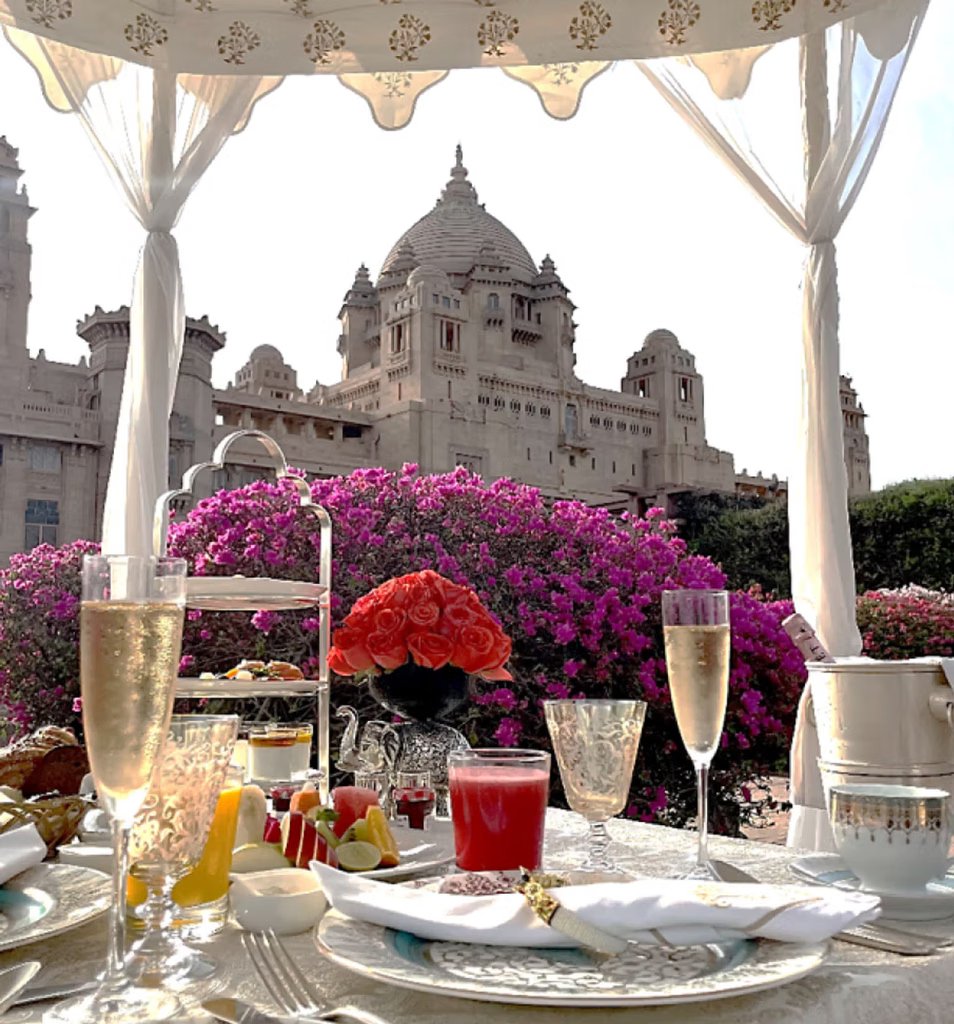
CHAMPAGNE BREAKFAST IN THE BOUGAINVILLEA GARDEN
Enjoy a once-in-a-lifetime breakfast experience at Umaid Bhawan Palace, Jodhpur, surrounded by colourful bougainvilleas and enhanc…

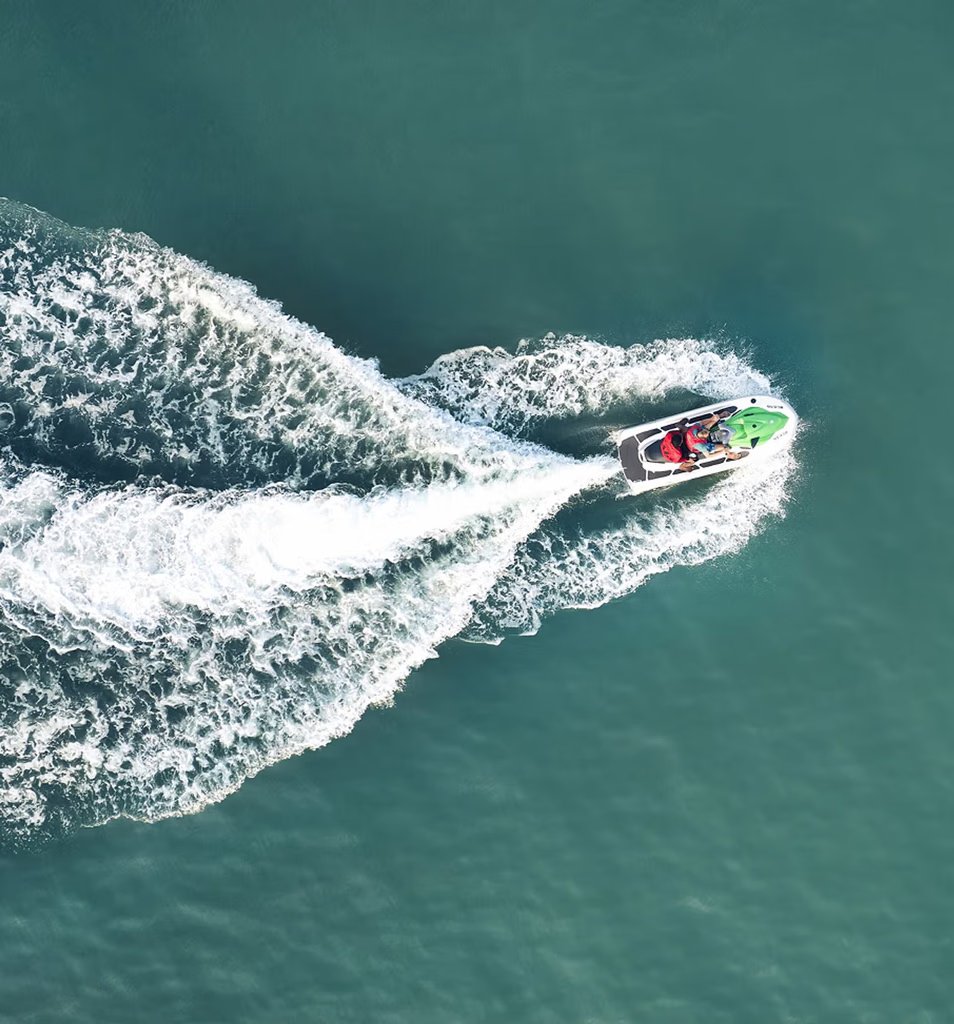
RIDE WAVES
At Taj Exotica Resort & Spa, Goa, adrenaline-seekers can consult our concierge for recommendations before diving into a thrilling …
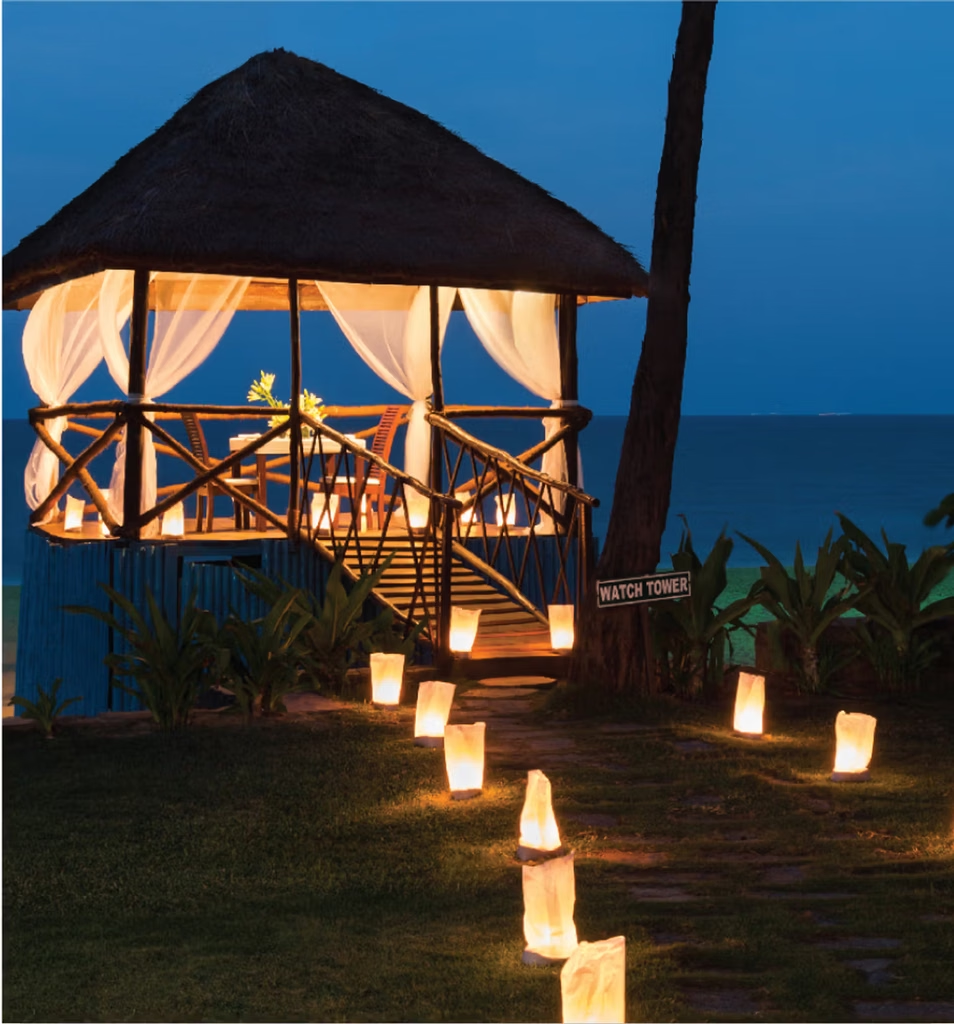
WATCH TOWER DINING
Taj Fisherman’s Cove Resort & Spa, Chennai offers a hidden, dreamy four-course feast in a charming thatched gazebo, with sweeping …
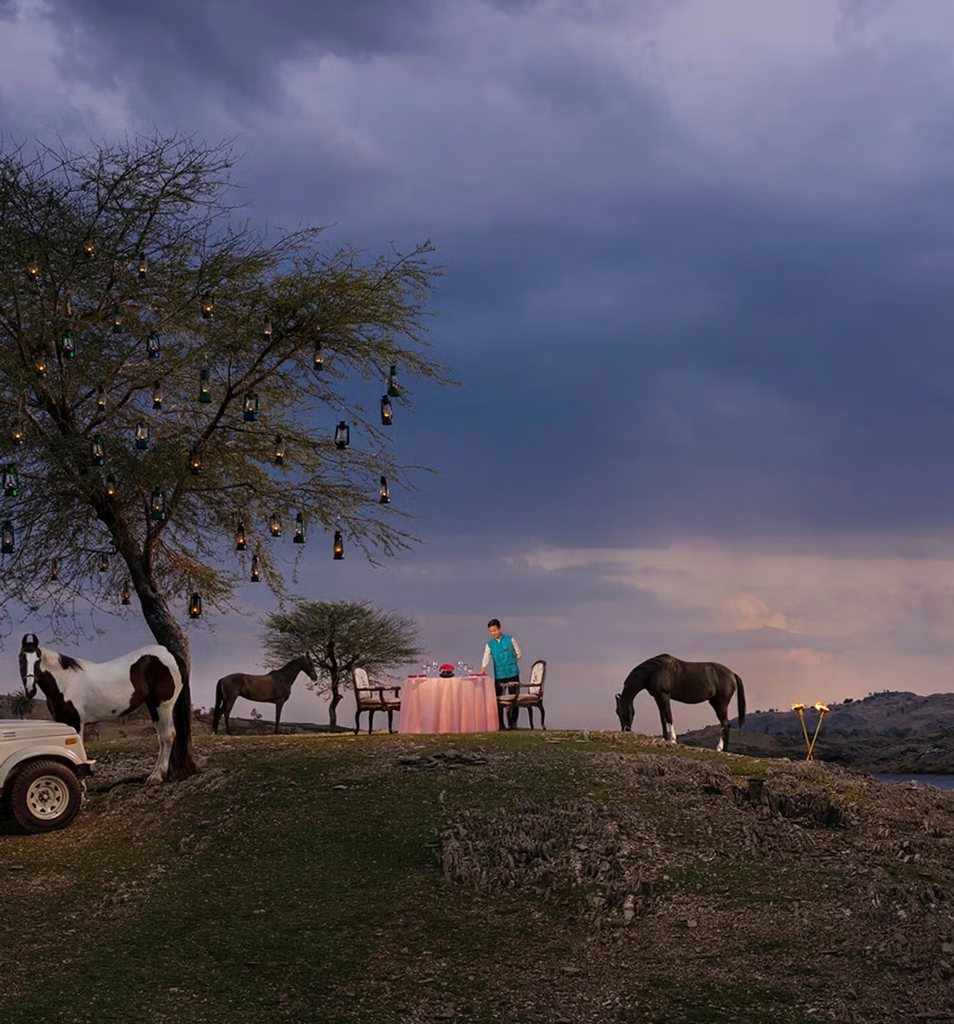
Sundowners at Alsigarh
Taj Aravali Resort & Spa, Udaipur sets the scene at Alsigarh, one of Udaipur’s hidden lakes, where a magical table setting offers …

The Mangroves on Canvas
Sip on gin-based cocktails at Taj The Trees, Mumbai and unleash your creativity amidst serene mangrove views. Let the tranquil bac…
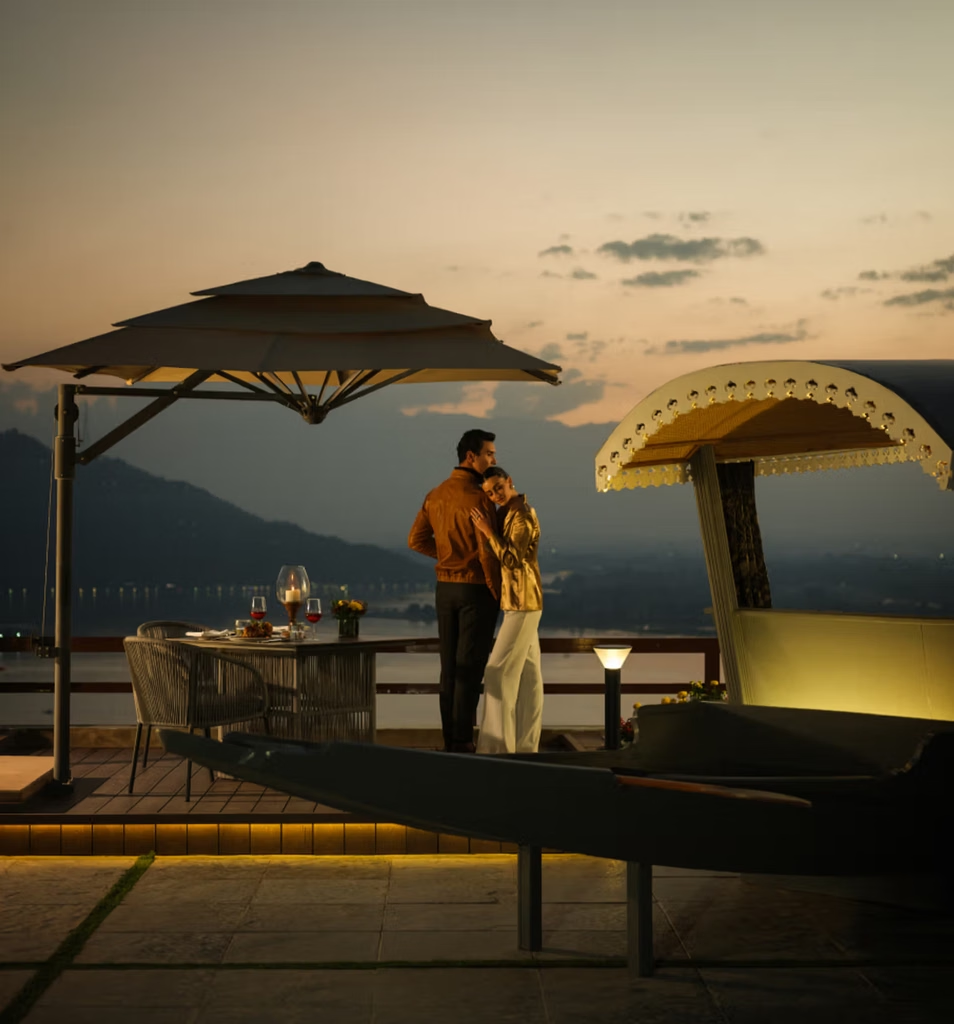
Shikara Dining
Indulge in the ultimate Shikara Dining experience, where the beauty of Kashmir unfolds around you in an exquisitely crafted meal f…
French restaurants of the 19th century
During the Napoleonic era the Palais-Royal, the colonnaded, tree-lined area adjacent the Louvre, became the site of many of the finest restaurants in Paris. The menu of the Véry, a leading restaurant of the era, listed a dozen soups, two dozen fish dishes, 15 beef entrées, 20 mutton entrées, and scores of side dishes. The novelist Honoré de Balzac often dined at the Véry, consuming prodigious quantities of oysters, fish, meat dishes, fruits, wines, and liqueurs. It was a favourite haunt of gourmet-author Grimod de la Reynière, who considered it the finest restaurant in France.
The Véry was absorbed in 1869 by the neighbouring Le Grand Véfour. This restaurant was still in business in the 2020s and was regarded as one of the finest eating places in France. Another outstanding Paris establishment of the 19th century was the Café Foy, later called Chez Bignon, a favourite dining place of the English novelist William Makepeace Thackeray and of the Italian composer Gioacchino Rossini, who lived in the same building. The Café de Paris, on the Boulevard des Italiens, was the first of many restaurants in Paris and elsewhere that have operated under this name. Other favourite eating places were the Rocher de Cancale, on the rue Montorgueil, famous for its oysters and fish, and the Restaurant Durand, at the corner of the Place de la Madeleine and the rue Royale, a favourite gathering place of politicians, artists, and writers, including the authors Anatole France and Émile Zola.
The most illustrious of all 19th-century Paris restaurants was the Café Anglais, on the Boulevard des Italiens at the corner of the rue Marivaux, where the chef, Adolphe Dugléré, created classic dishes such as sole Dugléré (filets poached with tomatoes and served with a cream sauce having a fish stock base) and the famous sorrel soup potage Germiny. On June 7, 1867, the Café Anglais served the now-famous “Three Emperors Dinner” for three royal guests visiting Paris to attend the Universal Exposition. The diners included Tsar Alexander II of Russia; his son the tsarevich (later the tsar Alexander III); and King William I of Prussia, later the first emperor of Germany. The meal included soufflés with creamed chicken (à la reine), fillets of sole, escalloped turbot, chicken à la portugaise (cooked with tomatoes, onions, and garlic), lobster à la parisienne (round, flat medallions glazed with a gelatin-mayonnaise mixture and elaborately decorated), ducklings à la rouennaise (the carcasses stuffed with liver and pressed, presented on a platter with boned slices of the breast and the grilled legs, and served with a red wine sauce containing pureed liver), ortolans (small game birds) on toast, and eight different wines.Although the Café Anglais closed in 1913, when the building was demolished, the table setting for this dinner is now displayed at La Tour d’Argent, the oldest surviving restaurant in Paris.Toward the end of the 19th century, in the gaudy and extravagant era known as la belle époque, the luxurious Maxim’s, on the rue Royale, became the social and culinary centre of Paris. The restaurant temporarily declined after World War I but recovered under new management, to become an outstanding gastronomic shrine.France produced many of the world’s finest chefs, including Georges-Auguste Escoffier, who organized the kitchens for the luxury hotels owned by César Ritz, developing the so-called brigade de cuisine, or kitchen team, consisting of highly trained experts each with clearly defined duties. These teams included a chef, or gros bonnet, in charge of the kitchen; a sauce chef, or deputy; an entremettier, in charge of preparation of soups, vegetables, and sweet courses; a rôtisseur to prepare roasts and fried or grilled meats; and the garde manger, in charge of all supplies and cold dishes. In Escoffier’s time, the duties and responsibilities of each functionary were sharply defined, but in modern times, rising labour costs and the need for faster service have broken down such rigidly defined duties. In the kitchens of even the leading modern restaurants, duties at the peak of the dinner-hour preparations are likely to overlap widely, with efficiency maintained amid seeming chaos and confusion.